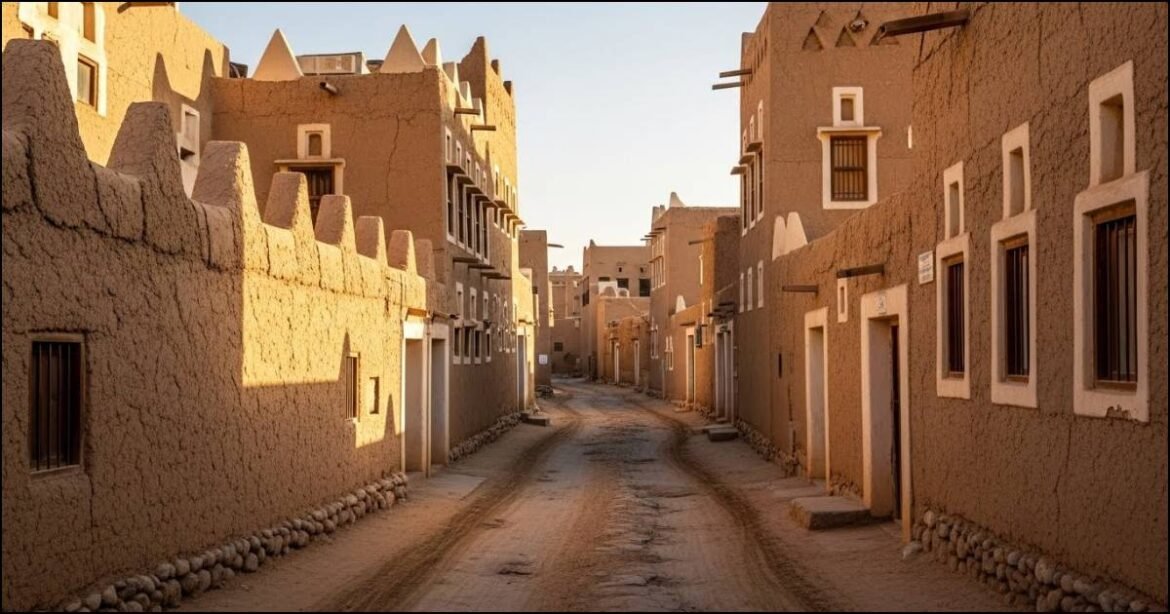
When I think about Old Riyadh. I do not imagine wide highways or tall buildings. I picture narrow streets. Quiet paths. Roads that once carried footsteps, conversations and daily life.
Old Riyadh streets were not random. They were carefully shape to connect the city gates, neighborhoods, markets and mosques. Each street had a role. Each one tells a story.
Let me walk you through these streets step to step, just like I would if we were exploring them together. 😊
Understanding the Streets of Old Riyadh
Before modern planning, Old Riyadh depend on a network of main and side streets. These streets connect the city gates to each other and guided people toward markets, palaces and residential areas.
Movement was simple but organized. You entered through a gate. You followed a street. You reached your destination.
That system made life easier and safer.
These streets were more than pathways. They were part of daily routines, trade, worship and governance.
List of Streets of Old Riyadh
Here is the Important List of Old Riyadh Streets:
- Al-Thumairi Street
- Al-Sheikh Mosque Street
- Dakhna Street
- Al-Sweilim Street
- Al-Dhahirah Street
- Al-Khan Street
- Al-Muraighib Street
- Qasr Al-Hukm Southern Street
- Al-Mahkama Street
- Al-Masmak Street
Al-Thumairi Street
Al-Thumairi Street was one of most important streets in Old Riyadh.
It extended from Al-Safat Square to Al-Thumari Gate. This made it a vital connection between the heart of city and one of its main entrances.
When I read about this street, I imagine merchants moving goods, visitors entering the city and residents crossing paths every day. It was active. It was alive.
Even today, Al-Thumairi Street remains one of the most well known historical streets in Riyadh.
Al-Sheikh Mosque Street
Al-Sheikh Mosque Street extended south from the downtown area toward Arair Manfuha Gate.
This street held religious importance. It connected residential zones with mosques and learning spaces. People used it daily for prayer, study and community gatherings.
I always feel that streets leading to mosques carried a special rhythm. They followed prayer times and community life not clocks.
This street reflects how faith shaped the layout of Old Riyadh.
Dakhna Street
Dakhna Street is known today as Mohammed Bin Abdulwahab Street.
It played a key role in linking different parts of the city. Over time, its name changed but its importance remained.
This street reminds me that cities evolve, but their foundations stay the same. Even when names change, the path continues to serve people.
Dakhna Street was one of those steady roads that supported daily movement without drawing attention to itself.
Al-Sweilim Street
Al-Sweilim Street extended from Al-Sweilim Gate, located on the northern side of city.
This street acted as a main entry route. People coming from the north passed through this gate and followed Al-Sweilim Street into the city.
From there, smaller streets branched off into neighborhoods and markets.
I see this street as a welcoming path. It guided visitors from outside into the heart of Old Riyadh.
Al-Dhahirah Street
Al-Dhahirah Street was located within the Al-Dhahirah Neighborhood.
It extended toward the southern side of Al-Safat Square, placing it close to one of the city’s most active areas.
This street connected residential life with public space. It allowed people to move easily between their homes and the city center.
For me, this shows how Old Riyadh balanced privacy and openness through smart street placement.
Al-Khan Street
Al-Khan Street had a unique layout.
It extended from Al-Thumairi Street and zigzagged south until it reached Al-Qadimah Neighborhood.
This zigzag design was intentional. It helped provide shade, reduce wind and protect privacy. It also slowed movement, making the area safer.
I find streets like this fascinating. They show how architecture responded to climate and social needs at the same time.
Al-Muraighib Street
Al-Muraighib Street extended from the northern side of the area to Al-Muraighib Al-Shamsi Gate.
This street connected internal neighborhoods with an external gate. It supported trade, travel and daily movement.
Streets like Al-Muraighib played a quiet but powerful role. They kept the city connected to the outside world.
Without them, Old Riyadh would have felt isolated.
Qasr Al-Hukm Southern Street
This street was located south of Qasr Al-Hukm, one of most important political landmarks in Old Riyadh.
It extended toward the eastern side of the Al-Safaqat area and continued to the western side of old city.
This street served administrative and governance purposes. Officials, messengers and visitors used it regularly.
When I think about this street, I imagine decisions being carried along it. News. Orders. Meetings. It was a street of responsibility.
Al-Mahkama Street
Al-Mahkama Street branched from the northern side of Al-Sweilim Street. It extended south until it reached Al-Muqaibirah Market. This street linked legal and commercial life. Courts, markets and public activity came together here.
I like how practical this feels. Old Riyadh placed related functions close to each other, reducing unnecessary movement.
Everything had a purpose.
Al-Masmak Street
Al-Masmak Street was located west of Al-Masmak Palace, one of Riyadh’s most iconic landmarks.
It extended from north to south until it intersected with Al-Thumairi Street.
This street connected military, political, and commercial areas. It allowed easy access to the palace while keeping daily city life flowing.
Standing near this street today, you can still feel its historical weight.
Why Old Riyadh Streets Matter
You might wonder why streets deserve this much attention.
Here is why.
Old Riyadh streets show how the city functioned before modern planning. They reveal how people moved, met, traded and lived together.
These streets were shaped by climate, culture, faith and security. They were not just roads. They were solutions.
When I study them, I see intelligence and care in every turn.
Walking Through History
If you ever explore the old areas near Qasr Al-Hukm and Al-Masmak, take a moment to notice the paths.
Some follow straight lines. Others turn gently. Each one once carried real lives.
Walking these streets feels different. You are not just moving forward. You are stepping back.
Final Thoughts
Old Riyadh streets were the veins of the city. They connected gates, neighborhoods, mosques, markets and palaces.
They shaped daily life in ways we still feel today. For me, understanding these streets makes Riyadh feel more human. More grounded. More alive.
History does not always sit in museums. Sometimes, it runs beneath your feet.
You Can also Read this: AlUla Saudi Arabia: History, Culture and Vision