Al Sadu Weaving in Saudi Arabia
Al Sadu weaving is a traditional Bedouin craft. It is deeply rooted in Saudi Arabian heritage. This craft is mainly practiced by women. It turns natural wool into strong and useful textiles. Al Sadu reflects desert life. It also shows cultural identity. UNESCO has recognized this craft. Even today, it continues despite modernization.
Historical Origins of Al Sadu
Al Sadu weaving started thousands of years ago. It began among nomadic Bedouin tribes. These tribes lived across the Arabian Peninsula. This includes central and northern Saudi Arabia. Bedouin women developed this skill for daily needs. Men sheared wool from sheep, camels, and goats. Women used this wool to make tents and rugs. They also made saddles and other useful items. Life in the desert was harsh. So, everything had to be strong and portable.
Regions like Najd and the Eastern Province preserved this craft. The knowledge was passed down by word of mouth. Girls learned by watching older women. They learned how to spin yarn and weave on ground looms. Historical records link Al Sadu to pre-Islamic times. Its patterns showed tribal identity. The designs were inspired by camels, tents and nature.
Techniques and Materials
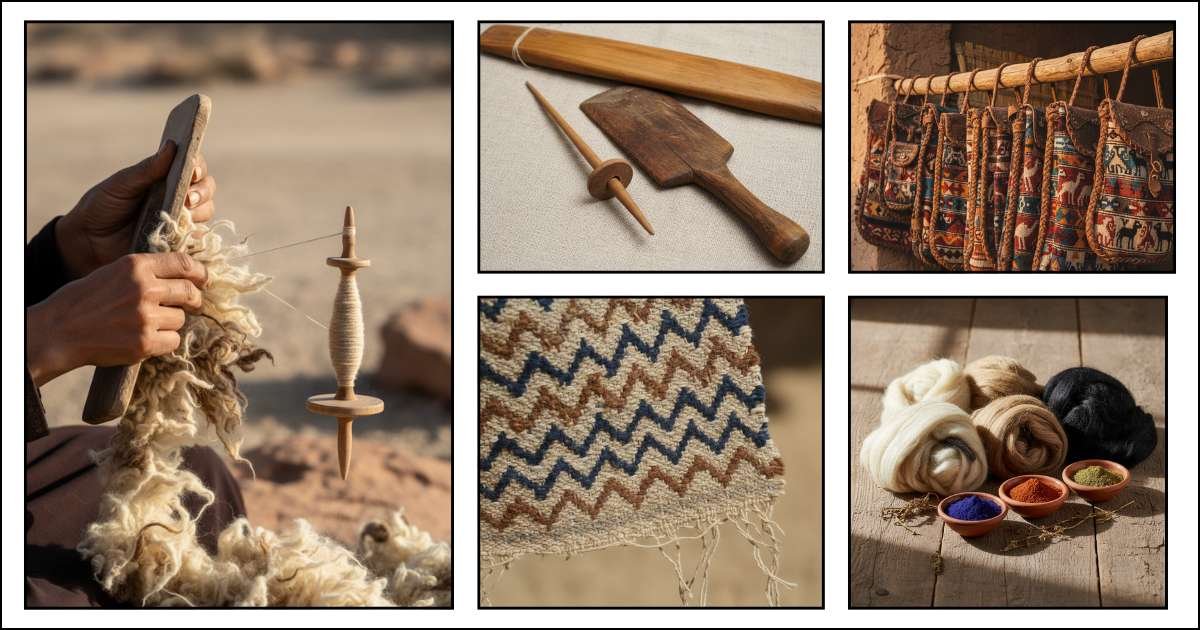
The process starts with raw wool. First, the wool is cleaned. Then it is carded using a tool called Menfash. This tool is made of wood with metal nails. After that, women spin the fibers into yarn. They use handheld spindles for this work. Natural dyes are used for coloring. Henna gives red color. Saffron gives yellow. Weaving is done on a horizontal ground loom. A simple but strong weaving method is used. This makes the fabric dense and durable.
Patterns and Designs
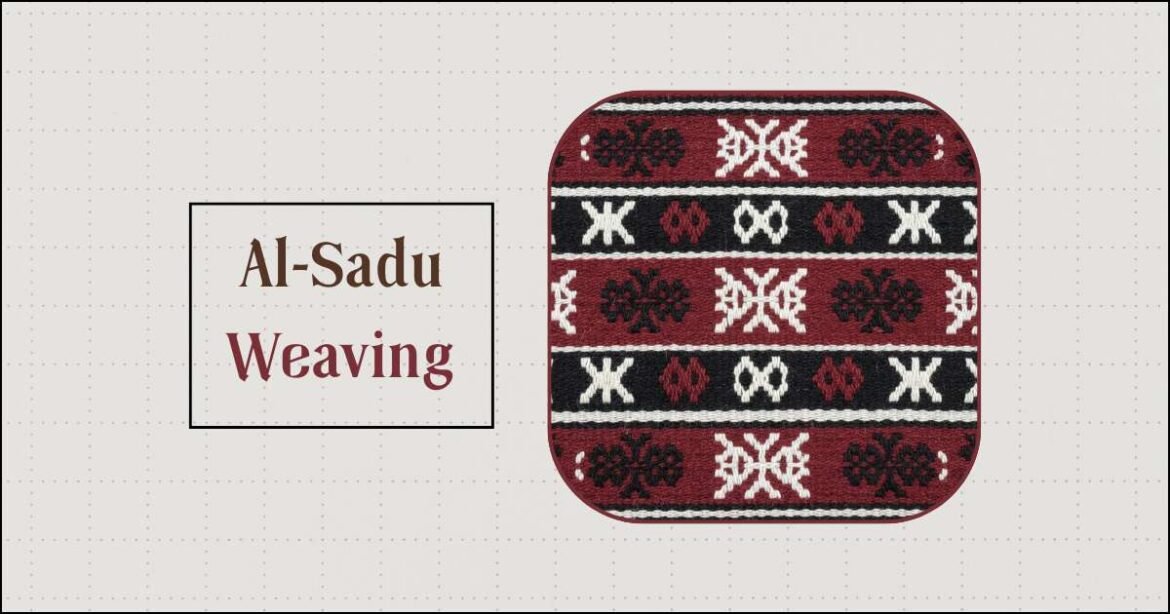
Al Sadu patterns are geometric. They include triangles, zigzags and diamonds. Common colors are black, white, red and beige. These patterns are called Asbab. Each pattern has meaning. They tell stories of travel, protection and life. They also reflect fertility and survival. The final products include:
- Bayt al-sha’ar (hair tents)
- Cushions
- Mats
- Camel decorations
All items are tightly woven for long use.
Cultural Importance
Al Sadu is more than weaving. It brings women together. Women gathered in Majlis to weave. They shared stories and recited poetry. This strengthened social bonds. Al Sadu also showed wealth and status. Fine yarn meant a skilled weaver. In Saudi culture, women are the keepers of this heritage. Each tribe has its own style. Najdi designs use bold contrasts. Some regions add shapes of birds or palm trees. This craft helped preserve Bedouin identity.
UNESCO Recognition
In 2020, UNESCO recognized Al Sadu weaving. It was added to the Intangible Cultural Heritage list. Saudi Arabia and Kuwait shared this recognition. The honor highlights cultural diversity. It also supports sustainable traditions. After this, many initiatives began. Training centers and exhibitions were launched. The goal is to pass this craft to younger generations.
Modern Revival of Al Sadu
Saudi Arabia is reviving Al Sadu today. Social enterprises like Atharna offer workshops. These are held in Riyadh and Jeddah. Fashion designers also use Al Sadu patterns. Mohammed Khoja blends them into modern fashion. Al Sadu motifs appeared in major events. They inspired the G20 Summit logo. They also influenced the Riyadh Expo 2030 emblem. Festivals and markets promote Al-Sadu products. These include home décor and accessories. This helps women earn income. Technology also helps. Digital archives store traditional patterns. Cooperatives support women in rural areas.
Challenges and the Future
Urban life affects this tradition. Young people prefer modern fabrics. This makes transmission difficult. However, government programs are helping. NGOs offer training and support. Some use machine-spun yarns now. This creates debate about authenticity. Experts suggest mixing tradition with innovation. The future of Al-Sadu looks promising. Tourism and exports can support it. Saudi Arabia continues to present itself as a cultural hub.