Introduction: AlUla Saudi Arabia
AlUla Saudi Arabia is not just a place on the map. It is a story that spans thousands of years. When I talk about AlUla. I am talking about human history carved into stone, valleys shaped by time and a future built with care.
Locate in the northwest of Kingdom of Saudi Arabia, AlUla is one of most important heritage destinations in the world. It is a living museum, where nature, archaeology and culture exist together.
Location: Northwest Saudi Arabia
Region: Al-Madinah al-Munawwarah
Population: Around 60,103 (2022 census)
UNESCO Site: Hegra
Let me explain AlUla to you Everything step to step.
Geography of AlUla
Naming of AlUla
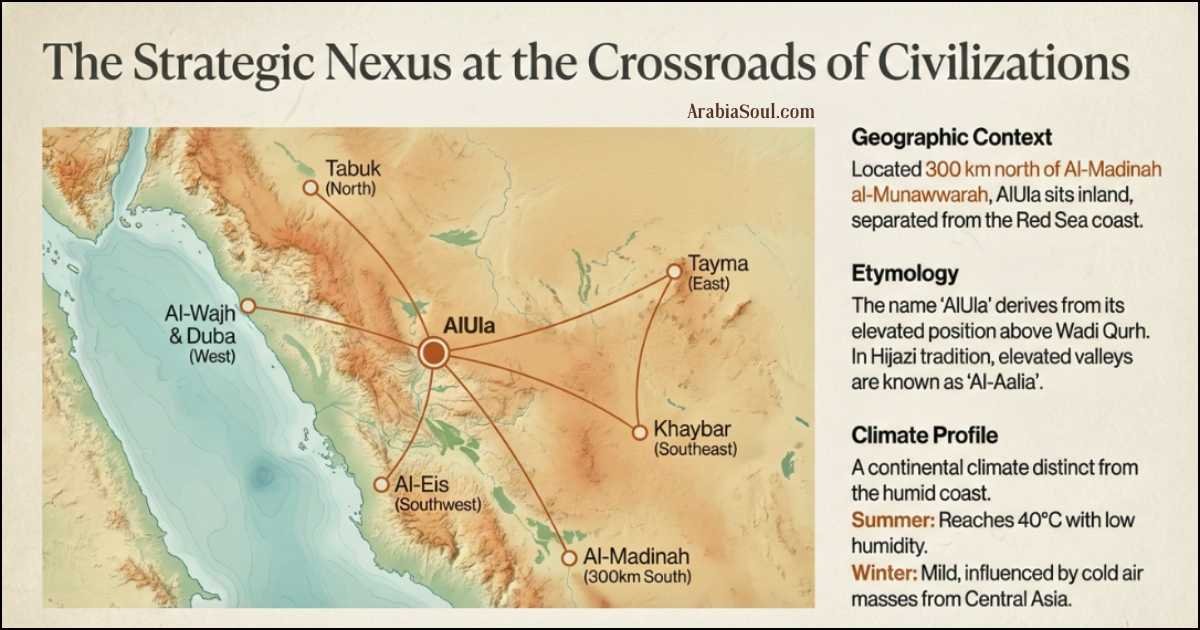
The name AlUla is believed to come from its elevated position above Wadi Qurh. In Hijazi traditions, elevated valley areas were often called Al-Aalia or Al-Ma’ali. The earliest known name of AlUla was Dadan, which served as the capital of the Dadanite and Lihyanite kingdoms.
Today, the ancient capital is known as Al-Khuraybah, one of most advanced cities of the Arabian Peninsula during the first millennium BC.
Location and Borders
AlUla lies about 300 km north of Al-Madinah al-Munawwarah.
It borders:
- Tayma to the east
- Khaybar to the southeast
- Al-Eis to the southwest
- Al-Wajh and Duba to the west
- Tabuk to the north
This strategic location placed AlUla on major ancient trade routes.
Climate in AlUla
AlUla has a continental climate. Summers are hot. Winters are mild and cooler.
Because AlUla is far from the Red Sea, humidity remains low. In summer temperatures can reach around 40°C. Winters are influenced by cold air masses from Central Asia, leading to cooler temperatures and limited rainfall.
Agricultural Wealth of AlUla
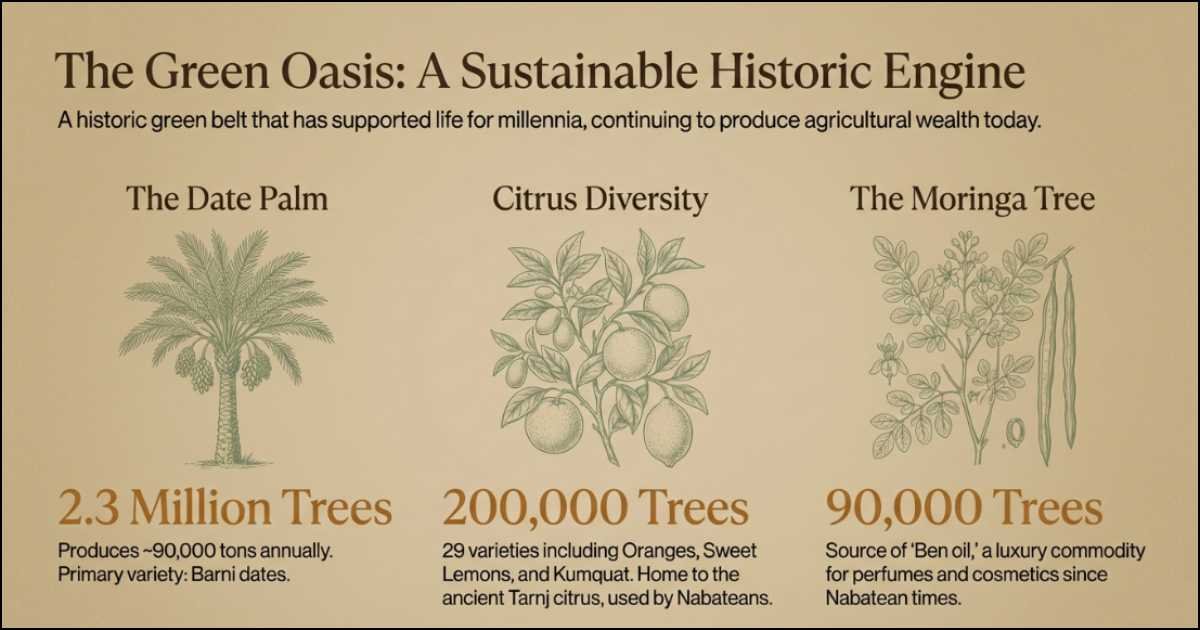
AlUla is home to a historic green oasis that has supported life for thousands of years.
Citrus Farming
The oasis contains around 200,000 citrus trees across 29 varieties. These include:
- Oranges
- Sweet lemons
- Grapefruit
- Pomelo
- Kumquat
The ancient Tarnj citrus used by Nabateans for perfumes and jam, still grows in AlUla today.
Moringa Peregrina Trees
AlUla’s oasis contains nearly 90,000 Moringa Peregrina trees. Oil extracted from their seeds, known as Ben oil, has been used since Nabatean times for perfumes and cosmetics.
This oil was traded across civilizations and even used by royal families centuries ago.
Date Palm Cultivation
Date farming has always been central to economy of AlUla.
- Palm trees: About 2.3 million
- Production: Around 90,000 tons annually
- Main type: Barni dates
Dates remain a vital economic and cultural product.
Population of AlUla
According to the 2022 census, AlUla has approximately 60,103 residents. The population continues to grow alongside development projects.
Geological Landmarks of AlUla
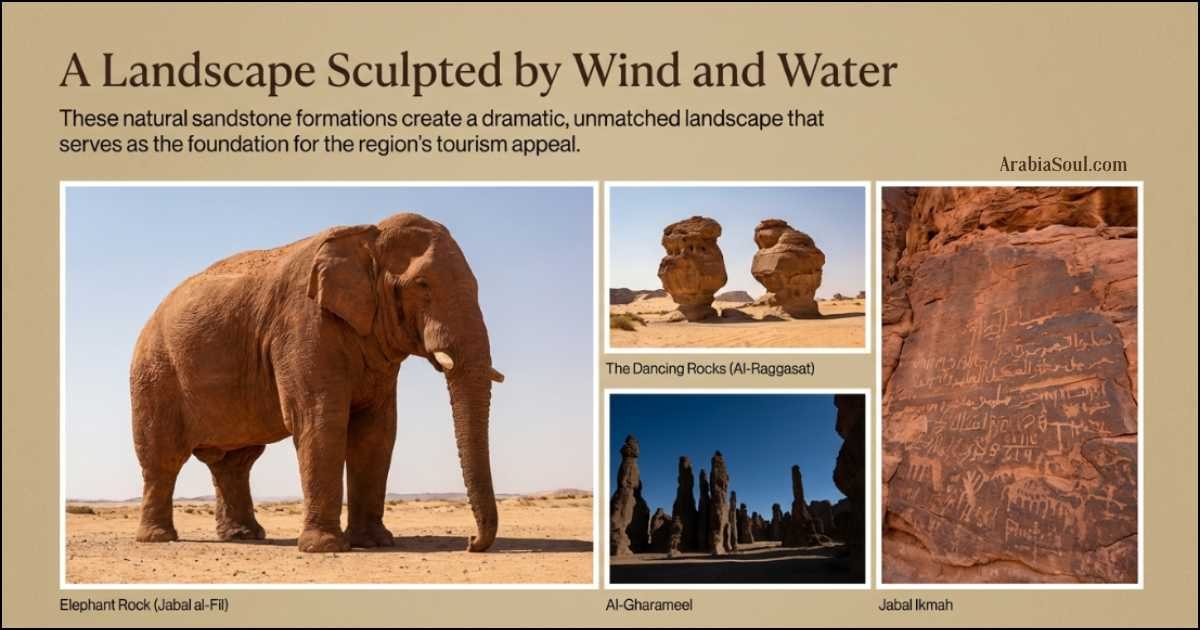
AlUla is famous for its natural rock formations shaped by wind and water.
Some of the most well-known landmarks include:
- Elephant Rock (Jabal al-Fil)
- Jabal Ikmah with ancient inscriptions
- Al-Gharameel pillars
- Rainbow Rock
- Dancing Rocks (Al-Raggasat)
- Face Rock
These formations create a dramatic natural landscape unmatched anywhere else.
Cultural Heritage of AlUla
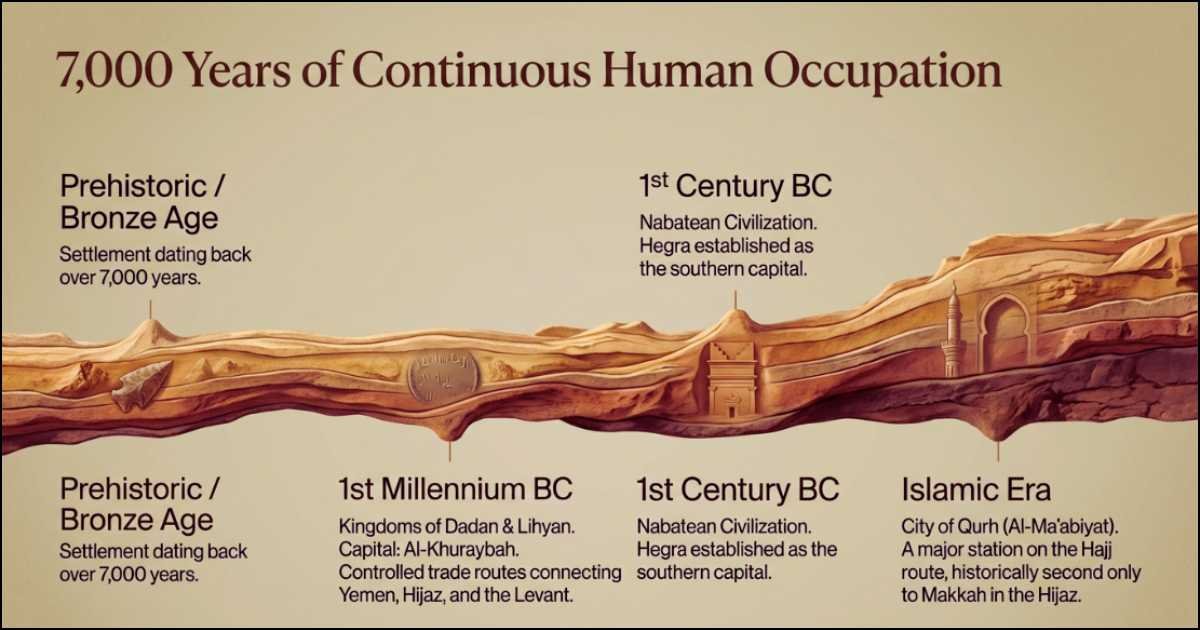
Prehistoric and Bronze Age
Human settlement in AlUla dates back over 7,000 years. Archaeological discoveries confirm occupation during the Stone Age and Bronze Age.
Dadan and Lihyan Kingdoms
During the first millennium BC, AlUla became a powerful center under:
- Kingdom of Dadan
- Kingdom of Lihyan
These kingdoms controlled trade routes connecting Yemen, Hijaz, Iraq, and the Levant.
Nabatean Period
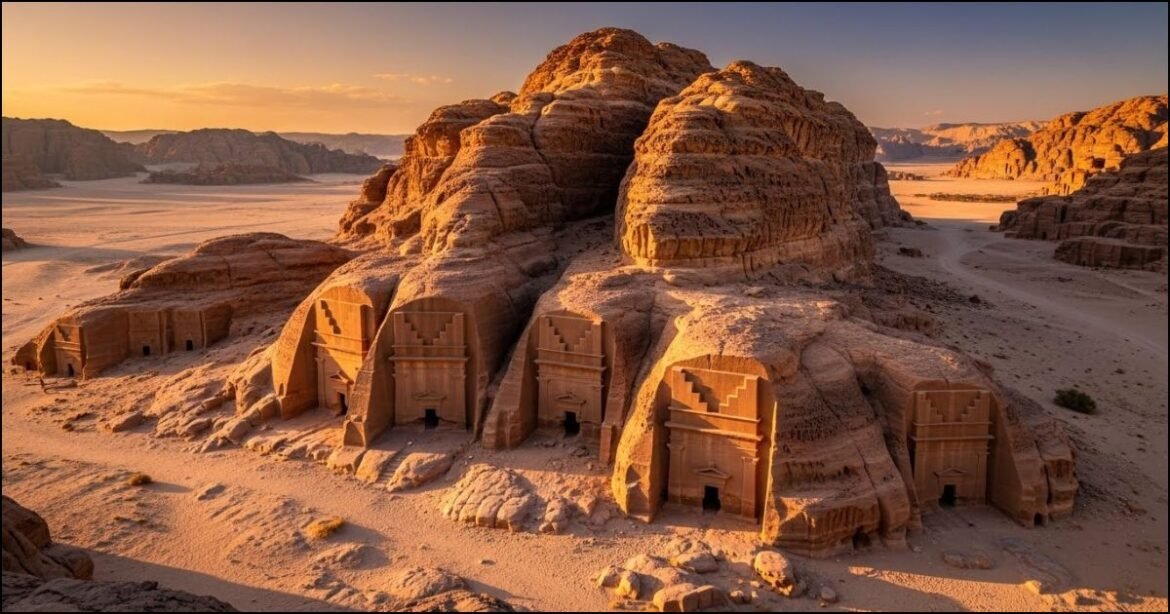
In the first century BC, the Nabateans made Hegra their southern capital.
Hegra is Saudi Arabia’s first UNESCO World Heritage Site, featuring more than 110 rock-cut tombs.
Islamic Era
AlUla became a major stop on the Hajj route from the Levant.
The city of Qurh (Al-Ma’abiyat) flourished and was once considered the second most important city in Hijaz after Makkah.
Archaeological Discoveries
Important finds include:
- Lihyanite sandstone statue displayed in the Louvre
- Reconstruction of Hinat, a Nabatean woman
- Jabal Umm al-Daraj incense brazier
- Lioness engraving symbolizing ancient biodiversity
AlUla and Saudi Vision 2030
AlUla plays a major role in Vision 2030.
Journey Through Time Project
This master plan stretches 20 km and includes:
- Old Town
- Dadan
- Jabal Ikmah
- Nabatean Oasis
- Hegra
It aims to turn AlUla into an open air global museum.
Economic Impact
By 2035:
- 38,000 jobs expected
- SAR 120 billion contribution to GDP
- SAR 57 billion invested
Tourism, culture, agriculture and arts drive this growth.
Royal Commission for AlUla
The Royal Commission for AlUla was established in 2017. It oversees sustainable development, heritage preservation and tourism growth.
Projects include:
- Sharaan Nature Reserve
- Arabian Leopard conservation
- Urban development programs
- Education and scholarship initiatives
Tourism in AlUla
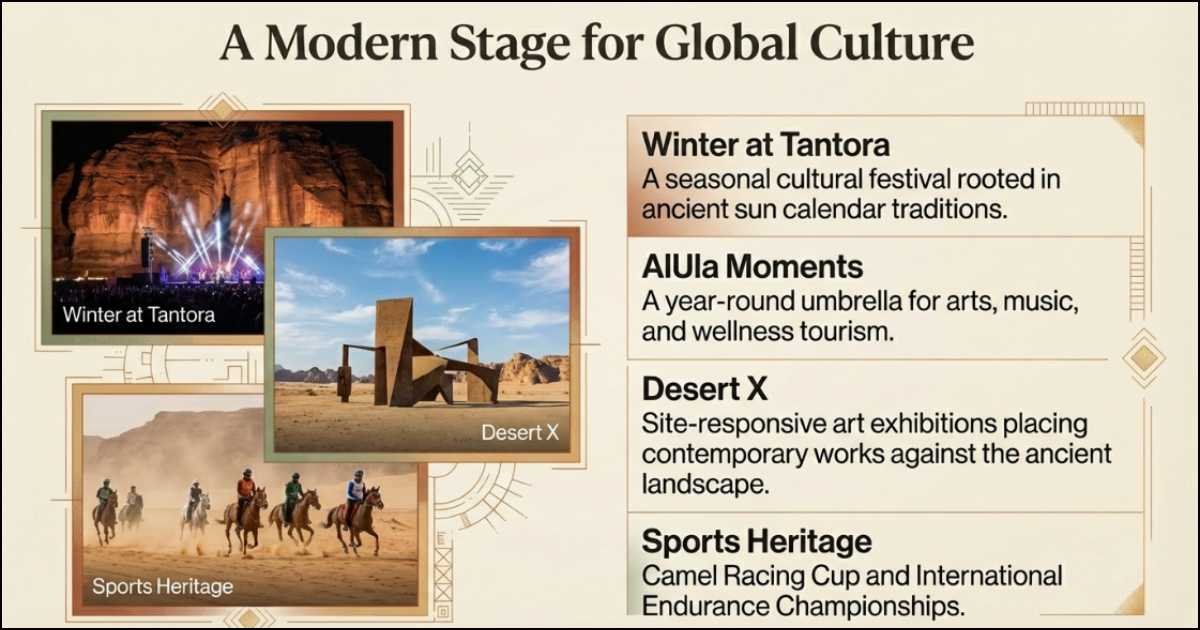
Winter at Tantora
A seasonal cultural festival inspired by ancient sun calendars.
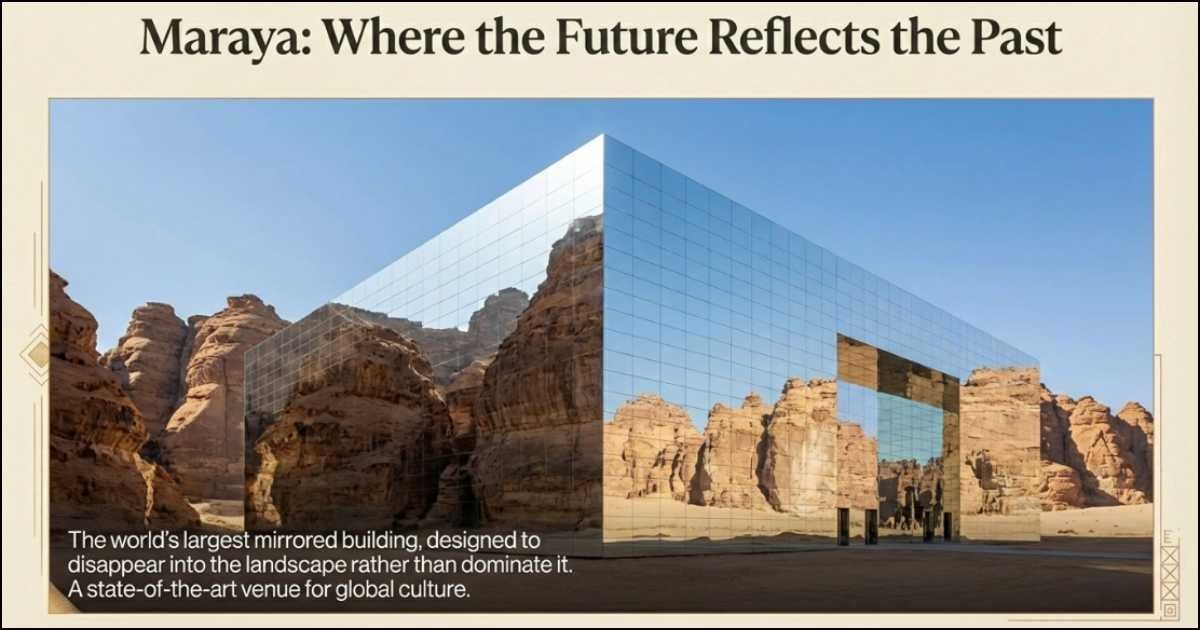
Maraya Hall
The world’s largest mirrored building.
A cultural venue hosting global events and concerts.
AlUla Moments
A seasonal tourism program featuring arts, music and wellness.
Development and Infrastructure
- AlUla International Airport
- Private aircraft terminal
- Electric train connecting heritage sites
- Sustainable urban planning
Art, Culture and Sports
AlUla hosts:
- Desert X exhibitions
- Artist residency programs
- Camel racing cups
- International endurance championships
Landmarks such as Maraya Concert Hall have place AlUla on the global cultural map.
Conclusion
AlUla Saudi Arabia is a bridge between past and future. It protects ancient civilizations while welcoming the world with a modern vision rooted in respect for nature.
It is not only preserving history. It is shaping what comes next. If you want to understand Saudi Arabia beyond oil. I truly believe AlUla is the perfect place to start.