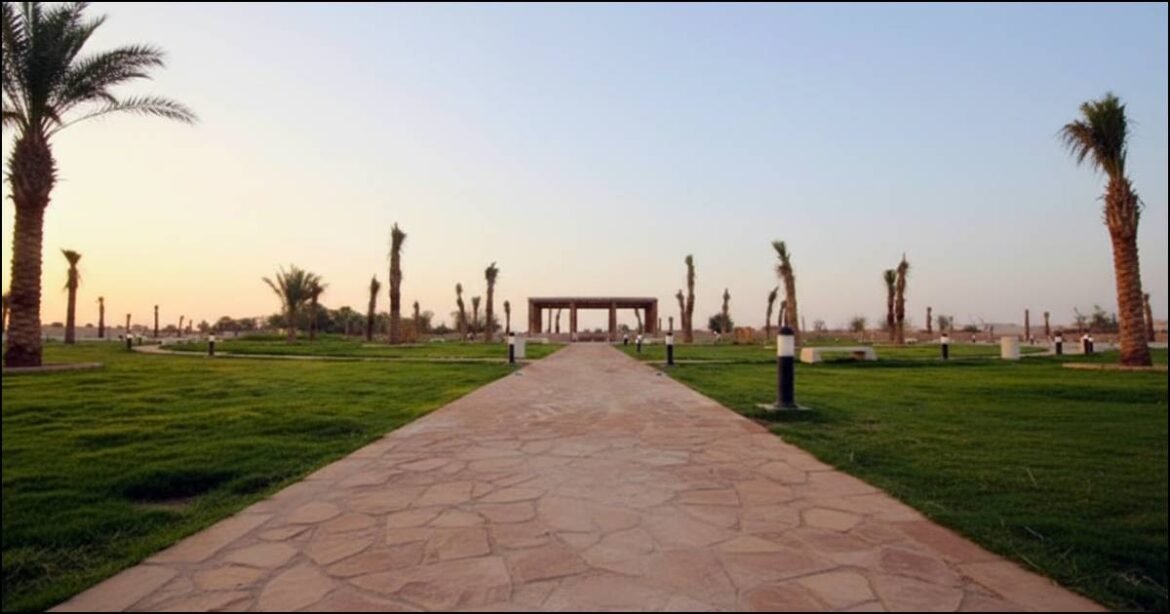
When I first know about the Arish of King Abdulaziz, I felt an instant connection. Some places do not need loud signs or long explanations. They speak quietly. This is one of them.
If you care about Saudi history or you enjoy meaningful places. I want to guide you through this landmark step by step.
What Is the Arish of King Abdulaziz
The Arish of King Abdulaziz is a historic landmark located in Al-Selmiyah Center in Al-Saih, within Al-Kharj Governorate in Riyadh Province, right in the heart of Kingdom of Saudi Arabia.
It was built in 1919 to receive the guests and visitors of the Founding King Abdulaziz Bin Abdulrahman Al Saud. It was not a palace. It was a simple council built for conversation, hospitality and connection.
That simplicity is what makes it powerful.
Why King Abdulaziz Used the Arish
To understand this place, you need to understand King Abdulaziz himself.
He believed leadership meant being close to people. During his frequent visits to Al-Kharj Governorate, especially in the summer, he used the Arish as a meeting council.
People from Al-Selmiyah and across Al-Kharj gathered there. They spoke with him directly. He listened. He welcomed them.
This continued until 1940, when a palace was later built for him in Al-Saih City.
For me this detail matters. It shows leadership without barriers.
Historical Background of the Site
The Arish was established on the farms of endowments of Imam Abdulrahman Bin Faisal Al Saud, the father of King Abdulaziz.
At that time, Al-Saih was surrounded by farms and palm trees. The Arish blended naturally into its environment. It respected the land. It reflected Najdi traditions.
Nothing about it felt forced.
Structure and Design of the Arish
The design of the Arish of King Abdulaziz is simple and intentional.
It consists of:
- A standing mud wall
- Roofing made from palm trunks and fronds
- A total area of about 100 square meters
These materials were common in traditional Najdi architecture. They worked well with the climate and offered shade and comfort.
When you stand there, you realize something important. It was never meant to impress. It was meant to serve.
Restoration and Development in 2011
Over time, the Arish needed protection.
In 2011, it was renovated as part of national efforts to preserve Saudi historical landmarks. The goal was preservation, not modernization.
The renovation included:
- Rebuilding the mud wall using traditional methods
- Reconstructing the council with palm trunks and wood
- Restoring the gates and the well
- Adding visitor seating areas
- Planting greenery across the site
- Creating walking paths
I appreciate how carefully this was done. The original spirit of place was respected.
The Arish as a Tourist Landmark
After restoration the Arish became both a historical and tourist site.
Several light services were added, including:
- Small food and beverage stalls
- Souvenir shops
- Car rental services
In 2019, the Arish of King Abdulaziz was officially included among Saudi Arabia’s tourist routes.
This step helped introduce the site to a wider audience while keeping its calm and respectful atmosphere.
Why the Arish Still Matters Today
You may wonder why a simple structure still matters.
Here is my honest Answer.
The Arish of King Abdulaziz represents how the Kingdom was built. It reflects leadership rooted in humility, listening and presence.
This is not distant history. It is something you can walk into.
For me, it stands as a symbol of unity and trust between a leader and his people.
Visiting the Arish of King Abdulaziz
If you ever visit Al-Kharj Governorate, I strongly suggest stopping here.
Take your time. Sit quietly. Let the place speak.
This is not a site you rush through. It rewards stillness.
Final Thoughts
The Arish of King Abdulaziz reminds me that powerful stories do not need grand buildings. Sometimes, history sits under palm fronds. If Saudi heritage matters to you, this landmark belongs on your list.
You Can Also Read If You want: Zamzam Water: History