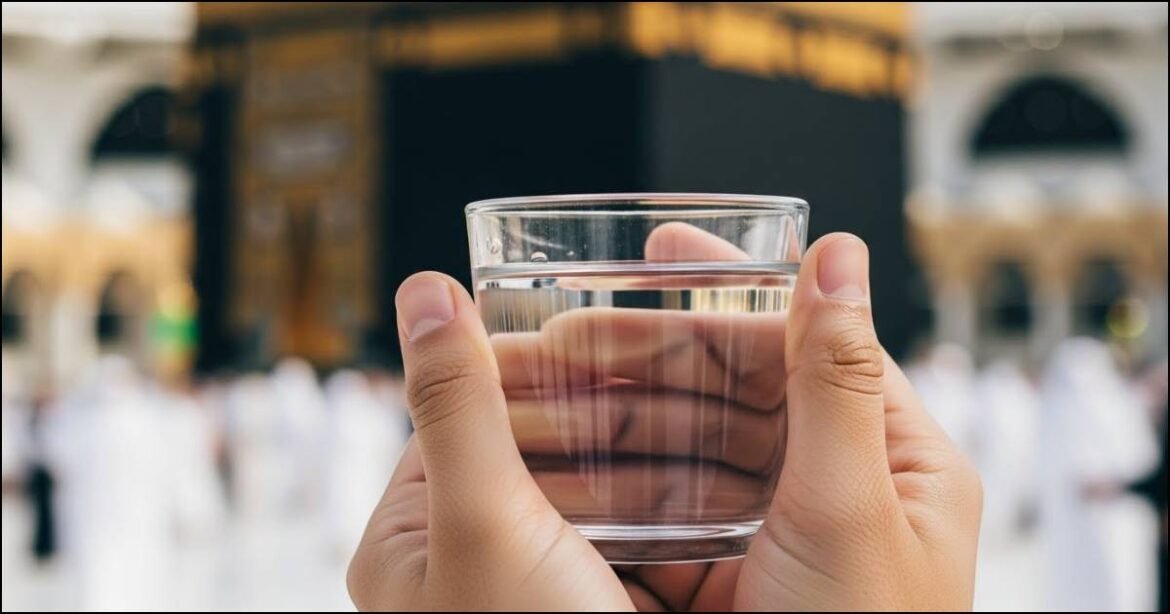
Zamzam Water comes from a sacred well located near the Holy Kaaba in Mecca. Muslims from all over the world drink it with love and respect. Millions of pilgrims rely on it during Hajj and Umrah. It refreshes the body and strengthens the soul.
Zamzam water is not just water. For Muslims, it is faith, history and mercy all flowing together. This water is special because its story is deeply connected to trust in God and divine care.
First of all Here is Some Facts:
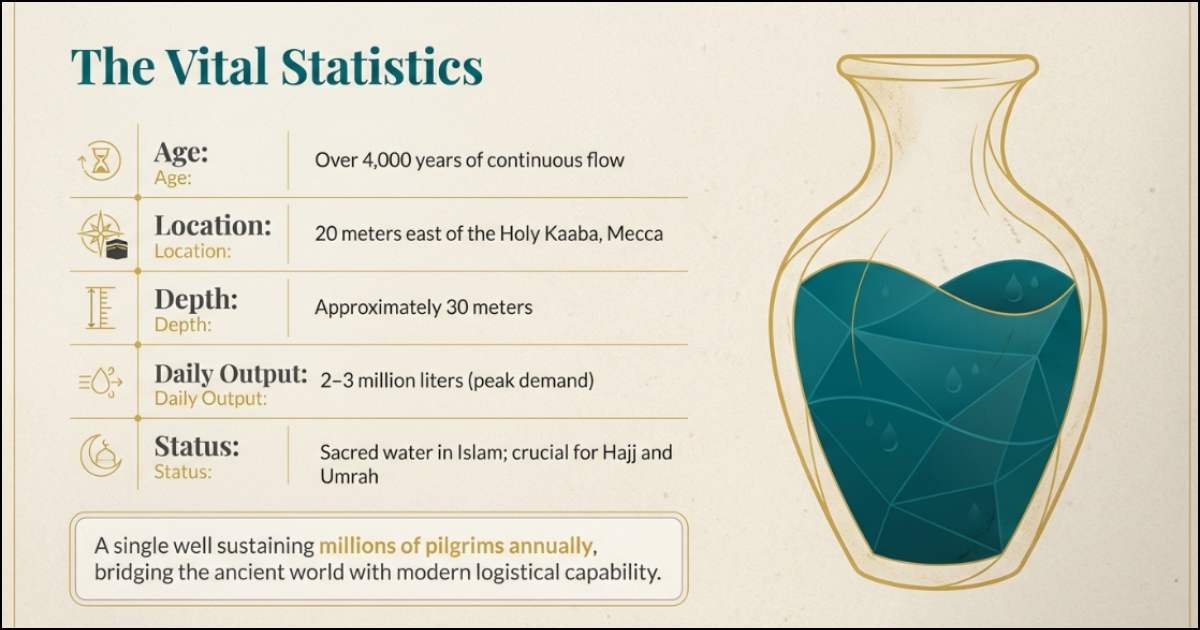
Source: Zamzam Well
Location: Mecca
Religious Use: Hajj and Umrah
Well Age: Over 4,000 years
Depth: Around 30 meters
Daily Supply: 2 to 3 million liters
Spiritual Status: Sacred and blessed water in Islam
Miraculous Origins of Zamzam Water
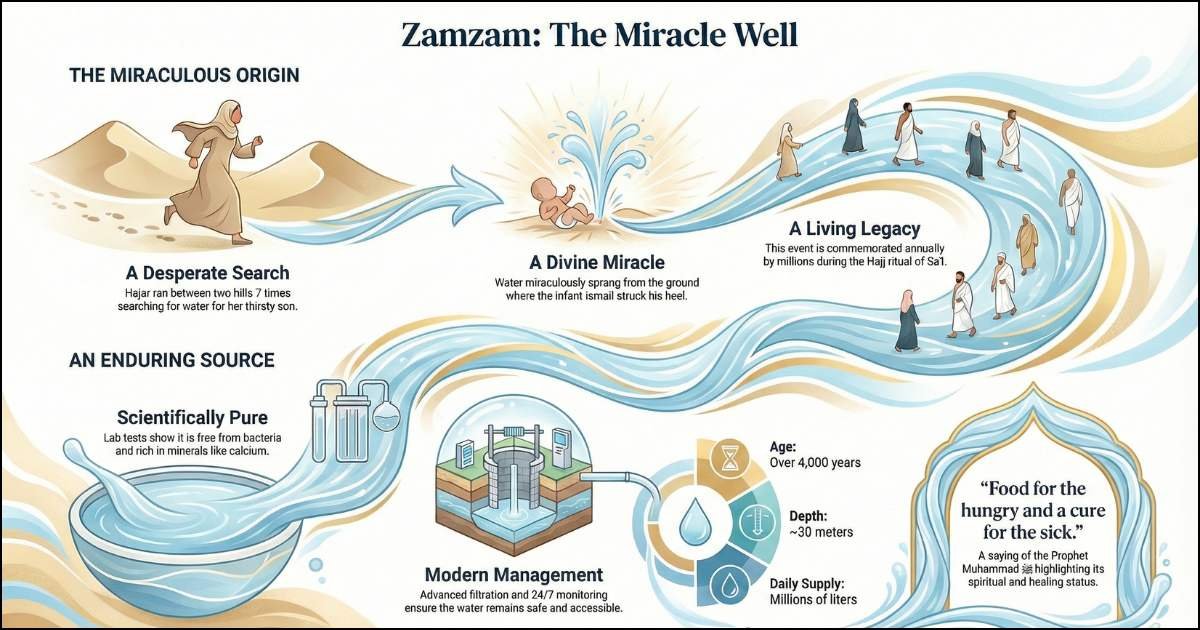
The story of Zamzam water begins thousands of years ago. It is connected to Prophet Ibrahim, peace be upon him.
On Allah’s command, Prophet Ibrahim left his wife Hagar (Hajar) and their infant son Ismail in a barren desert. There was no water. No shade. Nothing.
Soon, baby Ismail became thirsty. Hagar (Hajar) ran desperately between the hills of Safa and Marwah seven times searching for water.
Then something miraculous happened.
When Ismail struck the ground with his heels, water suddenly sprang from the earth. That water was Zamzam. It saved their lives. Soon, tribes settled nearby. This area later became Mecca.
The name Zamzam comes from Hajar’s words Zomé Zomé, meaning stop flowing. She tried to control the water so it would not overflow.
This event is remember every year during Hajj in the ritual of Sa’i. It teaches patience, effort and complete trust in God.
Historical Journey of Zamzam Well
Over time, Zamzam became central to life in Mecca.
At one stage, the Jurhum tribe misused the well. According to history, the well was buried or dried up. For many years its exact location was lost.
Later Abdul-Muttalib, the grandfather of Prophet Muhammad, saw a dream guiding him to the well. He dug until water flowed again. From that moment, Zamzam returned as the lifeline of Mecca.
Before Islam, the Quraysh tribe controlled the well and charged people for water. After Islam, Abbas ibn Abdul-Muttalib organized fair access. Non essential uses were restricted. Pilgrims were always given priority.
Despite wars, rebuilding and disputes, Zamzam continued to flow.
Location and Structure of Zamzam Well
The Zamzam well is locate about 20 meters east of Kaaba inside Masjid al-Haram.
Some key physical facts:
- Depth is around 30 meters
- The well is fed by rainwater from distant mountains
- It has been flowing continuously for over 4,000 years
- Capacity is around 400,000 cubic meters
Even during peak Hajj season, the well supplies millions of liters every day without drying up.
Science Behind Zamzam
Many people ask if Zamzam water is scientifically special. Researchers have studied it many times.
Laboratory tests show:
- It contains calcium, magnesium and fluoride
- It is free from bacteria and contamination
- Constant natural flow prevents stagnation
- Mineral balance stays stable over time
Unlike ordinary wells, Zamzam has never shown microbial growth. Modern pumping systems ensure hygiene and safety.
There is also a common myth about artificial bottling. Officially Zamzam is carefully managed and protected. Unauthorized bottling is not allowed.
Religious Importance of Zamzam Water
Spiritually, Zamzam holds unmatched importance.
The Prophet Muhammad ﷺ said that Zamzam water is “food for the hungry and cure for the sick.” Muslims believe it carries barakah, meaning divine blessing.
There are certain etiquettes when drinking Zamzam:
- Face the Kaaba
- Drink in three sips
- Sit while drinking
- Make sincere dua
People often take Zamzam water back home to share with family and friends. It is consumed with faith, gratitude and hope.
Modern Management of Zamzam
In the 20th century, King Abdulaziz ordered major modernization of Zamzam facilities.
Today, the Saudi government uses:
- Advance pumps and filtration
- Underground storage tanks
- Automate distribution systems
- 24/7 quality monitoring
The Zamzam Company oversees distribution locally and internationally. Bottles are carefully seal and export worldwide.
By 2025, plans include solar power systems and digital apps that track water quality in real time.
Health and Cultural Role of Zamzam Water
Zamzam water helps with hydration, especially during desert heat. Its mineral content supports electrolyte balance.
Some studies suggest anti inflammatory benefits. But for believers, its real power comes from faith.
Culturally, Zamzam connects people. Families share it after Hajj. Mosques distribute it. Museums highlight its story under Saudi Vision 2030.
During Hajj 2025 alone, millions of pilgrims drank Zamzam daily.
Challenges and Preservation Efforts
Protecting Zamzam is a serious responsibility.
To preserve it:
- Private drilling around Mecca is banned
- Rainwater harvesting projects are active
- Ai based monitoring tracks water levels
- Usage is strictly regulated
Technology and tradition work together to ensure Zamzam remains safe for future generations.
Conclusion
Zamzam Water is more than a natural spring. It is living miracle. It tells a story of trust, patience and divine mercy.
For over 4,000 years, it has quenched thirst. Not just of the body but of the soul.
As long as faith lives, Zamzam will continue to flow.
I hope I explain Zamzam water in a meaningful way. If you ever get the chance to visit Mecca, drink Zamzam with gratitude and prayer.
Also Read: AlUla Saudi Arabia: History, Culture and Vision